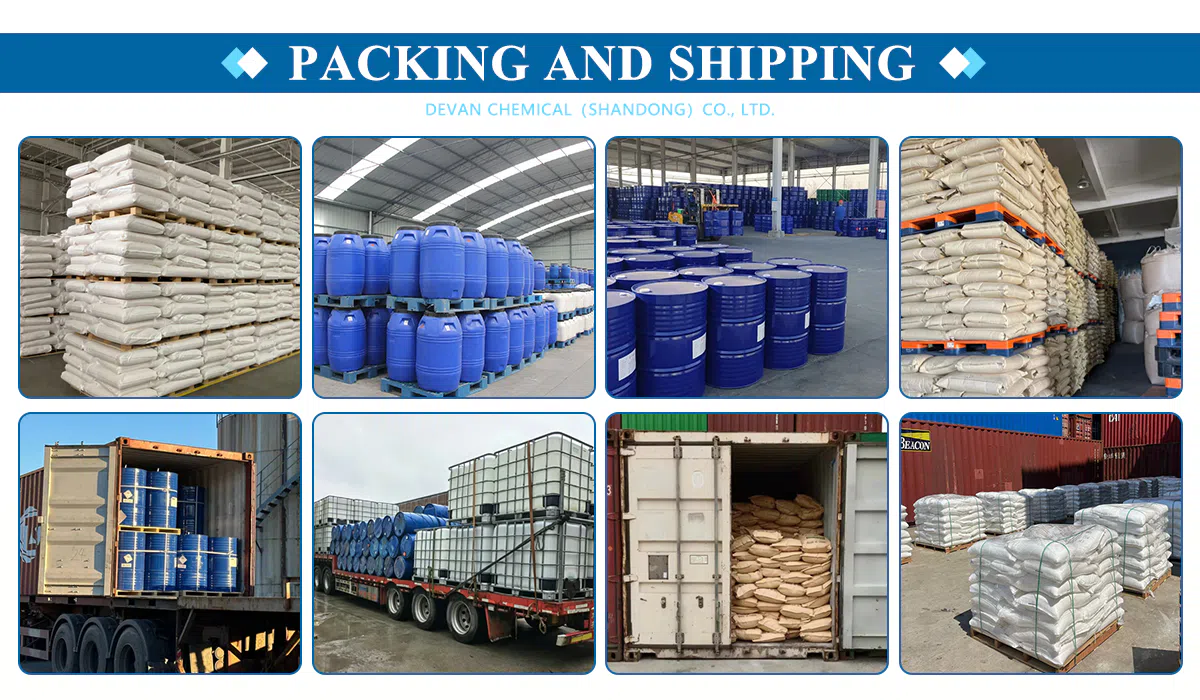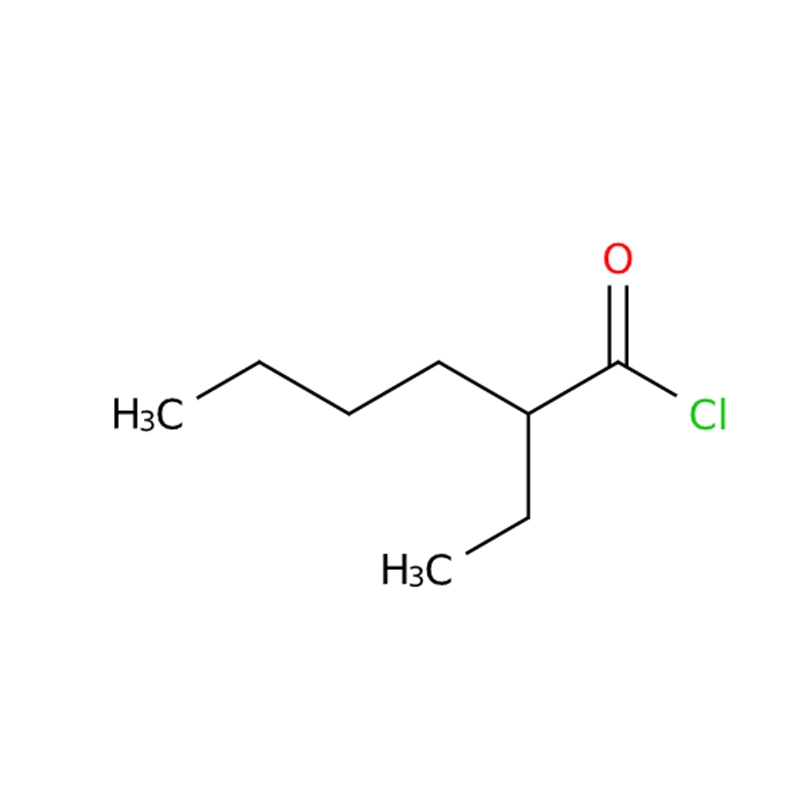
Products Description of 2-Ethylhexanoyl Chloride CAS#760-67-8
2-Ethylhexanoyl chloride (Molecular formula: C₈H₁₅ClO, Molecular weight: 162.657) is an organic compound. It appears as a colorless to pale yellow oily liquid with an intense irritating odor. Its density is 0.939 g/cm³ at 25°C; the boiling point reaches 67-68 °C at atmospheric pressure, while the melting point is lower than -75°C. Its closed-cup flash point is 69.4°C.
This substance shows acidity and is soluble in water and acetone. Serving as a crucial reactive intermediate, it is primarily applied for the synthesis of agrochemicals, pharmaceutical products and peroxyester initiators.
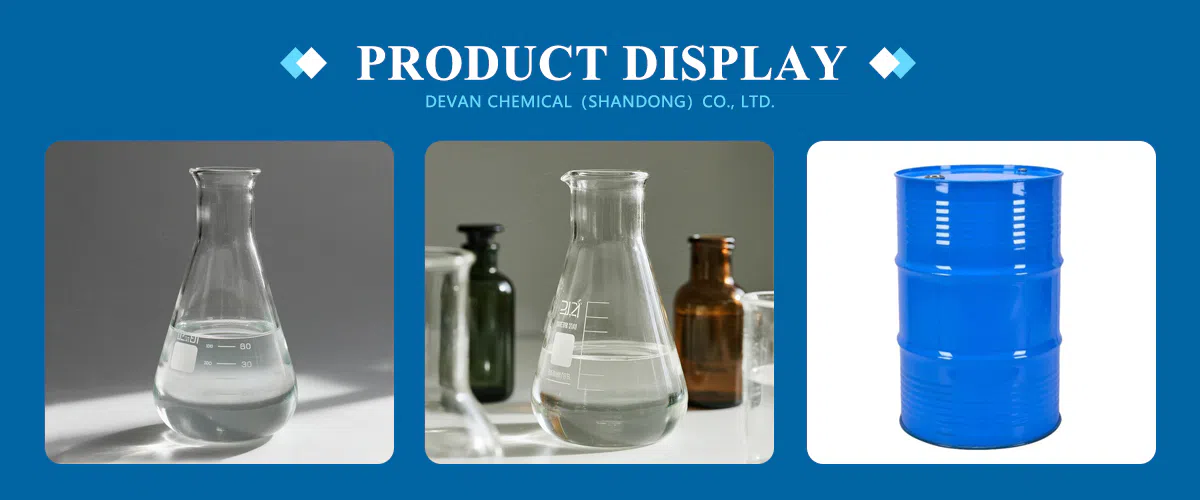
2-Ethylhexanoyl chloride Chemical Properties
| Melting point | <-75°C |
| Boiling point | 67-68 °C/11 mmHg (lit.) |
| density | 0.939 g/mL at 25 °C (lit.) |
| vapor pressure | 0.72 mm Hg ( 67.7 °C) |
| refractive index | n20/D 1.433(lit.) |
| Fp | 157 °F |
| storage temp. | Store below +30°C. |
| form | clear liquid |
| color | Colorless to Almost colorless |
| Water Solubility | Reacts with water. |
| Sensitive | Moisture Sensitive |
| BRN | 956601 |
| InChIKey | WFSGQBNCVASPMW-UHFFFAOYSA-N |
| CAS DataBase Reference | 760-67-8(CAS DataBase Reference) |
| NIST Chemistry Reference | Hexanoyl chloride, 2-ethyl-(760-67-8) |
| EPA Substance Registry System | Hexanoyl chloride, 2-ethyl- (760-67-8) |
| Hazard Codes | C |
| Risk Statements | 34-43-41-23-22 |
| Safety Statements | 26-36/37/39-45-25 |
| RIDADR | UN 3265 8/PG 2 |
| WGK Germany | 1 |
| RTECS | MP4525000 |
| TSCA | Yes |
| HazardClass | 8 |
| PackingGroup | II |
| HS Code | 29159080 |
Product Application of 2-Ethylhexanoyl Chloride CAS#760-67-8
2-Ethylhexanoyl chloride is a highly reactive acyl chloride intermediate widely applied in fine chemical synthesis. It is mainly used to prepare amides, esters and other derivatives via acylation reactions. In pharmaceutical industry, it serves as key raw material for synthesizing pharmaceutical intermediates through acylation modification of active molecular skeletons. It is also used for manufacturing pesticide intermediates and herbicide components. For coating and polymer sectors, it can produce curing agents and lubricant additives.
Additionally, it acts as an important raw material for making oil-soluble surfactants and corrosion inhibitors. It is suitable for lab-scale research, pilot trials and industrial production of fine chemicals, and requires strict moisture control during formulation and handling due to its sensitivity to water.