
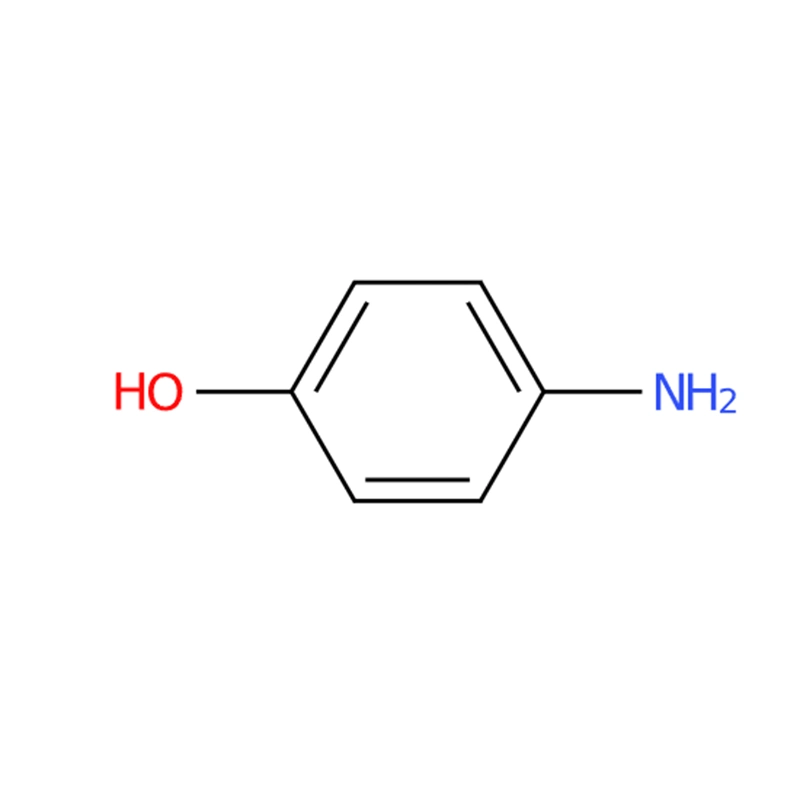
Product Description of 4-Aminophenol CAS#123-30-8
Also labelled as hydroxyaniline or aminohydroxybenzene, 4-aminophenol belongs to one of three structural isomers, namely the ortho-, meta- and para-aminophenol. The para-type compound was first prepared by Baeyer’s research team back in 1874. Every isomer carries unique physic-chemical traits, which stem from the varied placement of hydroxyl and amino functional groups on the benzene ring.
The para-isomer features mild acidic-alkaline traits and outstanding reducing capacity. Its amino and phenolic groups bring combined chemical traits of these two functional-group categories. The substance turns unstable under air and sunlight, and humid-state oxygen can easily trigger its deterioration. Ortho- and para-aminophenol are especially susceptible to oxidation, which causes colour darkening and the generation of aminophenoxazine by-products.
These isomeric substances cover plentiful industrial purposes. They act as dye precursors and photographic developing agents for acid, direct, sulphur, azo, mordant and vat-type colourants. Meta- and para-aminophenol work as core feedstock for medicines, weed killers, bactericides, pest-repellent chemicals and heat-sensitive colourants. The ortho variant finds further uses in metal anti-corrosion additives, hair-dye components, rubber anti-oxidants, petroleum processing aids, organic-synthesis catalysts and precious-metal testing reagents, alongside diversified organic synthetic intermediates.
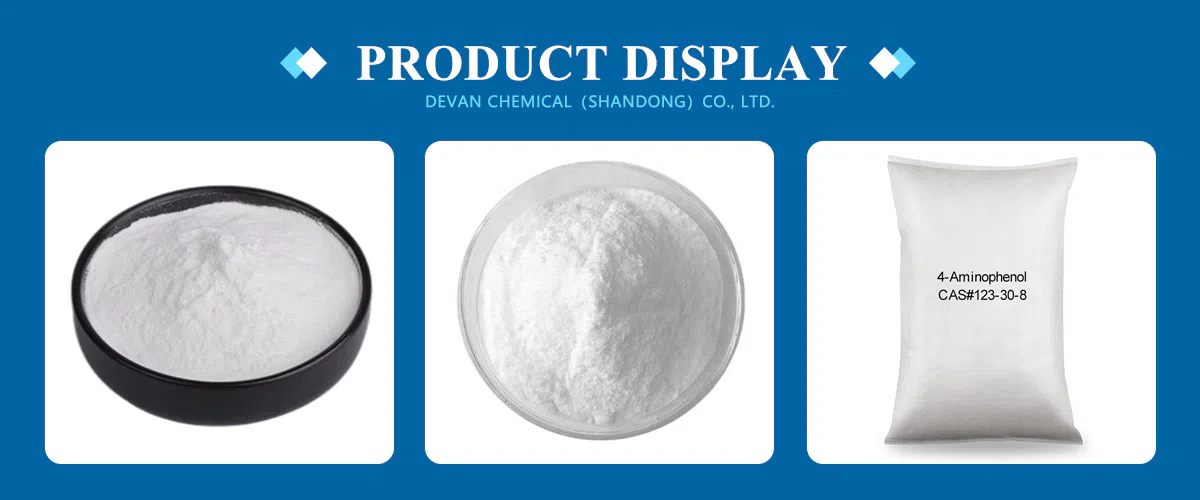
4-Aminophenol Chemical Properties
| Melting point | 188 °C |
| Boiling point | 284 °C |
| density | 1.29 |
| vapor pressure | 0.4 hPa (110 °C) |
| refractive index | 1.5444 (estimate) |
| Fp | 189 °C |
| storage temp. | 2-8°C |
| solubility | water: slightly soluble |
| form | Crystalline Powder |
| pka | 5.48, 10.30(at 25℃) |
| color | White to cream |
| Water Solubility | 1.5 g/100 mL (20 ºC) |
| Sensitive | Air & Light Sensitive |
| Decomposition | 284 °C |
| Merck | 14462 |
| BRN | 385836 |
| Stability: | Stable, though may discolour in air. Incompatible with acids, chloroformates, strong oxidizing agents. |
| InChIKey | PLIKAWJENQZMHA-UHFFFAOYSA-N |
| LogP | -0.09-0.04 at 25℃ |
| CAS DataBase Reference | 123-30-8(CAS DataBase Reference) |
| NIST Chemistry Reference | Phenol, 4-amino-(123-30-8) |
| EPA Substance Registry System | p-Aminophenol (123-30-8) |
Safety Information
| Hazard Codes | Xn,N |
| Risk Statements | 20/22-50/53-68-40-R68-R50/53-R20/22 |
| Safety Statements | 28-36/37-60-61-28A-S61-S60-S36/37-S28A |
| RIDADR | UN 2512 6.1/PG 3 |
| WGK Germany | 3 |
| RTECS | SJ5075000 |
| F | 8 |
| Autoignition Temperature | >250 °C |
| TSCA | Yes |
| HazardClass | 6.1 |
| PackingGroup | III |
| HS Code | 28402090 |
| HS Code | 29222900 |
| Hazardous Substances Data | 123-30-8(Hazardous Substances Data) |
| Toxicity | LD50 orally in Rabbit: 375 mg/kg LD50 dermal Rabbit > 10000 mg/kg |
Product Application of 4-Aminophenol CAS#123-30-8
4-Aminophenol is a valuable multi-purpose building-block chemical in fine-chemical manufacturing. Its powerful reducing property makes it well-suited for preparing photographic developing agents and multiple kinds of synthetic-dye intermediates for textile colouring.
Besides the dyestuff sector, this phenolic raw-material participates in the production of common analgesic-fever-reducing drug intermediates. It can also be processed into agro-chemical ingredients for plant-protection supplies.
Other practical uses cover thermal-sensitive colour-changing materials, rubber anti-ageing additives and laboratory analytical reagents. Proper sealed storage is required, since the substance will degrade and darken after long-time contact with moist air.