
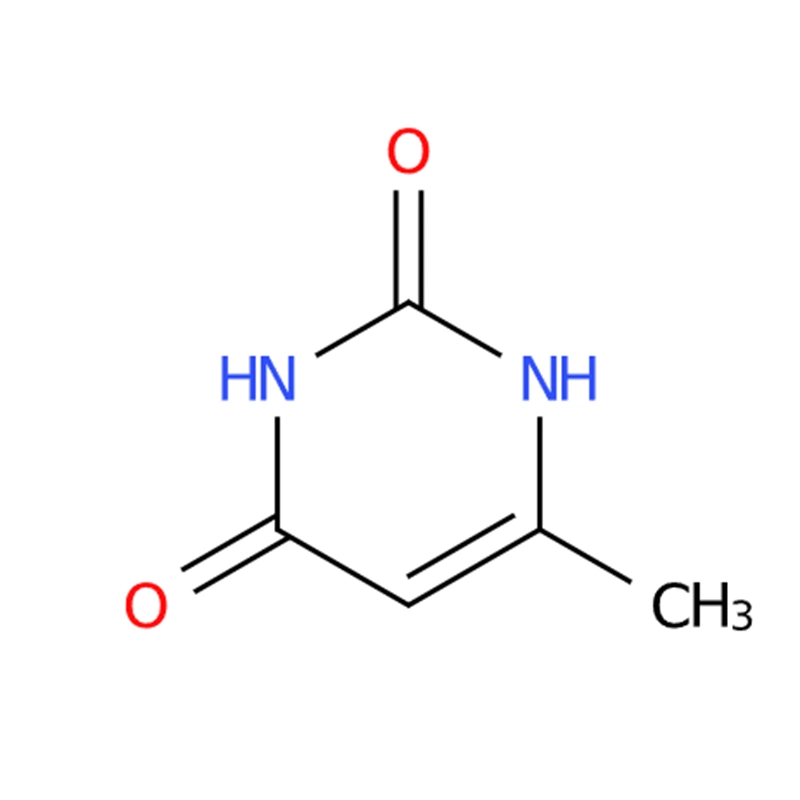
Product Description of 6-Methyluracil CAS#626-48-2
6-Methyluracil, alternatively named 2,4-dihydroxy-6-methylpyrimidine, is a white crystalline solid, with a melting point recorded at 318 °C and thermal decomposition possibly occurring around 270-280 °C. The substance can dissolve in water, hot ethanol and alkaline aqueous media, and shows low solubility in ether. Its water-based solution presents strong alkalinity.
Featuring a pyrimidine-dione ring structure, this heterocyclic molecule possesses good chemical reactivity, and is widely adopted as a key fine-chemical and pharmaceutical intermediate.
6-Methyluracil Chemical Properties
| Melting point | 318 °C (dec.)(lit.) |
| density | 1.226±0.06 g/cm3(Predicted) |
| storage temp. | Inert atmosphere,Room Temperature |
| solubility | DMSO (Slightly), Methanol (Slightly, Heated, Sonicated) |
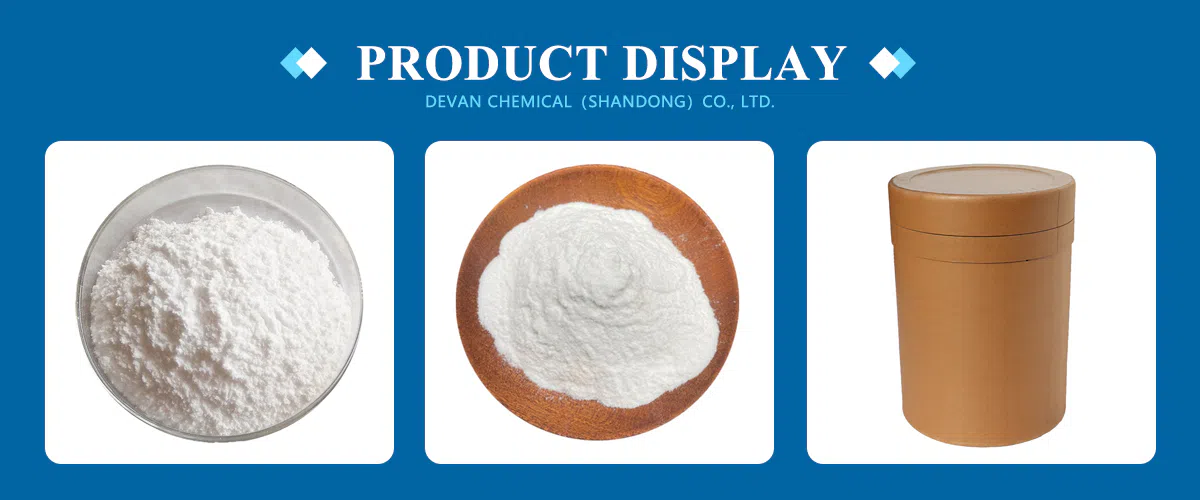
| form | Fine Crystalline Powder |
| pka | pK1:9.52 (25°C) |
| color | White to almost white |
| Water Solubility | 7 g/L (22 ºC) |
| Merck | 146133 |
| BRN | 115647 |
| InChIKey | SHVCSCWHWMSGTE-UHFFFAOYSA-N |
| CAS DataBase Reference | 626-48-2(CAS DataBase Reference) |
| NIST Chemistry Reference | 6-Methyluracil(626-48-2) |
| EPA Substance Registry System | 2,4(1H,3H)-Pyrimidinedione, 6-methyl- (626-48-2) |
| Hazard Codes | Xn |
| Risk Statements | 62-63 |
| Safety Statements | 36/37/39-45-36/37 |
| RIDADR | 1759 |
| WGK Germany | 3 |
| RTECS | YR0700000 |
| TSCA | Yes |
| HazardClass | 8 |
| PackingGroup | II |
| HS Code | 29335995 |
| Hazardous Substances Data | 626-48-2(Hazardous Substances Data) |
| Toxicity | LD50 oral in rat: 64500mg/kg |
Product Application of 6-Methyluracil CAS#626-48-2
6-Methyluracil acts as a critical heterocyclic intermediate for pharmaceutical and agro-chemical manufacturing. It is mainly employed to synthesize dipyridamole, a well-known cardiovascular drug. Dipyridamole was initially researched for relieving coronary insufficiency and angina, as well as preventing myocardial infarction. Nowadays, it is commonly used as an antithrombotic reagent during heart surgery and valve-replacement operations to lower the risk of thromboembolism.
Besides, this raw material can also participate in the preparation of orotic acid and some pesticide molecules, supporting diversified production demands across medicine and agrochemical sectors.