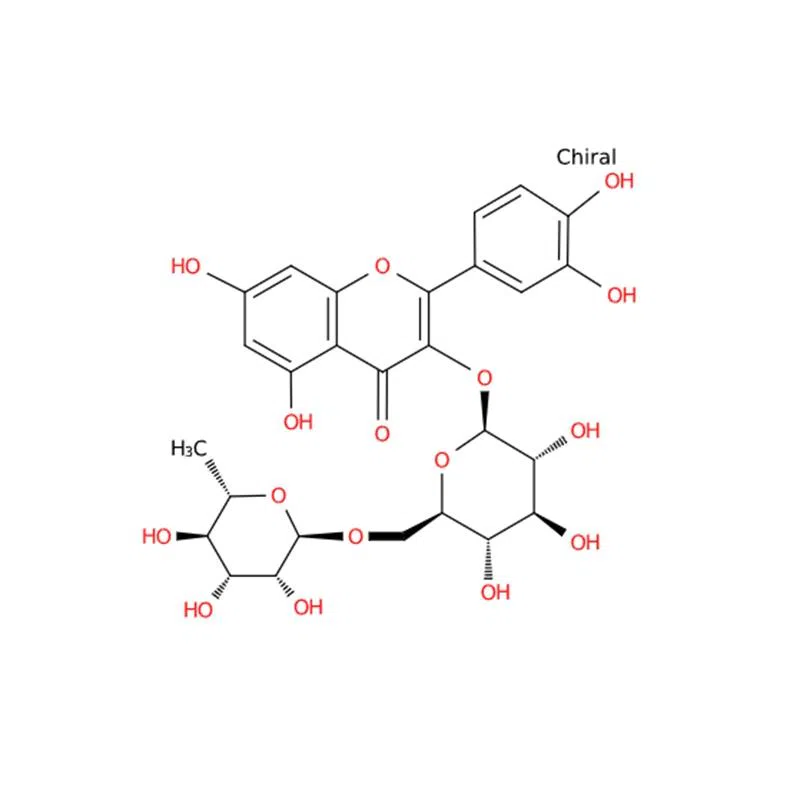
Product Description of Rutin CAS# 153-18-4
Rutin belongs to the flavonol glycoside derived from quercetin, which is categorized as a plant-sourced flavonoid. It naturally exists in numerous plant materials including rue, tartary buckwheat, pagoda tree buds, catalpa leaves, as well as tomato stems, foliage and seed husks. Dried buckwheat carries roughly 3% rutin. This substance can also be detected in jujube, hawthorn, ginkgo, goji berry, motherwort, bupleurum, self-heal, aloe and gynostemma pentaphyllum. The flower buds of Sophora japonica L. may have rutin content above 20%, rendering them the major feedstock for pharmaceutical-grade extraction within China.
Rutin is vulnerable to strong acid and alkali environments and may degrade when exposed to moisture. It tends to suffer color variation under alkaline surroundings, yet it possesses remarkable antioxidant properties. Dissolved in ethanol, it is capable of boosting the photostability of pigment formulations and avoiding gradual fragrance degradation or aroma modification. Its antioxidative performance will be further elevated when applied together with vitamin E.
Rutin Chemical Properties
| Melting point | 195 °C (dec.)(lit.) |
| alpha | D23 +13.82° (ethanol); D23 -39.43° (pyridine) |
| Boiling point | 576.13°C (rough estimate) |
| density | 1.3881 (rough estimate) |
| refractive index | 1.7650 (estimate) |
| storage temp. | Keep in dark place,Sealed in dry,2-8°C |
| solubility | pyridine: 50 mg/mL |
| Colour Index | 75730 |
| form | powder |
| pka | 6.17±0.40(Predicted) |
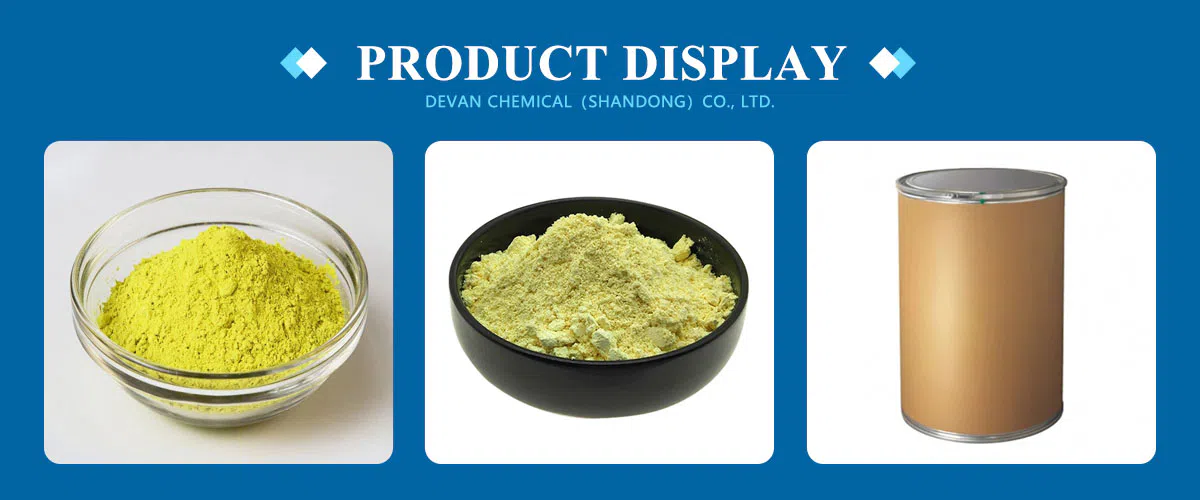
| color | yellow to green |
| Water Solubility | 12.5 g/100 mL |
| Merck | 8304 |
| Stability: | Hygroscopic |
| LogP | -2.020 (est) |
| CAS DataBase Reference | 153-18-4(CAS DataBase Reference) |
| NIST Chemistry Reference | Flavone-3-rutinoside, 3,3',4',5,7-pentahydroxy(153-18-4) |
| EPA Substance Registry System | Rutin (153-18-4) |
Safety Information
| Hazard Codes | Xn,Xi |
| Risk Statements | 22-36/37/38 |
| Safety Statements | 24/25-36-26 |
| WGK Germany | 3 |
| RTECS | VM2975000 |
| F | 8 |
| HS Code | 29381000 |
| Toxicity | LD50 i.v. in mice: 950 mg/kg (propylene glycol soln) (Harrison) |
Product Application of Rutin CAS# 153-18-4
Food Additive and Nutritional Supplement
As an antioxidant and nutritional fortifier, rutin can also function as a food color-modifying ingredient such as lemon yellow. It finds major usage in cold beverages, drinks, baked pastries, processed meat items and processed aquatic goods.
Vitamin and Pharmaceutical Applications
It can lower capillary permeability and brittleness, which assists in preserving and recovering normal capillary elasticity. This ingredient is utilized for the prophylaxis and therapy of hypertensive cerebral hemorrhage, diabetic retinal hemorrhage as well as hemorrhagic purpura. Apart from pharmaceutical purposes, it can also act as an antioxidant and colorant within food systems.
Cardiovascular and Liver Support
It delivers anti-inflammatory effects alongside vitamin P-like physiological functions. It helps sustain vascular resistance while cutting down capillary permeability and fragility. Moreover, it facilitates lipid metabolism improvement for fatty liver conditions, and such efficacy can be strengthened when used in conjunction with glutathione.
Additional Bioactive Properties
Rutin displays antiviral performance and generates inhibitory impacts on aldose reductase, supporting its wide-ranging therapeutic and protective practical uses.